Prolonged stress can manifest gradually, as signals that are often underestimated:
Persistent fatigue even after rest
Difficulty maintaining focus and attention
Irritability or reduced tolerance to stimuli
Widespread muscle tension
Feeling unable to "switch off" mentally even during breaks
Sleep disturbances
Possible causes and related factors
Stress can be linked to various factors, often concurrent:
intense or prolonged work rhythms
simultaneous management of multiple responsibilities
constant demands without adequate breaks
difficulty interrupting the flow of activities
It is not always linked to a specific event, but to a combination of conditions that persists over time and becomes difficult to manage.
How to take action
Addressing stress means first of all reducing the overall load and creating real recovery conditions.
Reorganizing rhythms, introducing effective breaks, and improving sleep quality are fundamental elements for restoring balance.
When the load persists over time, it may be helpful to complement these actions with targeted support, which helps the body recover energy and better manage the most intense phases.
Support during periods of greater load
In the presence of prolonged stress, a supplement can be used as an adjuvant to support the body during periods of greater pressure.
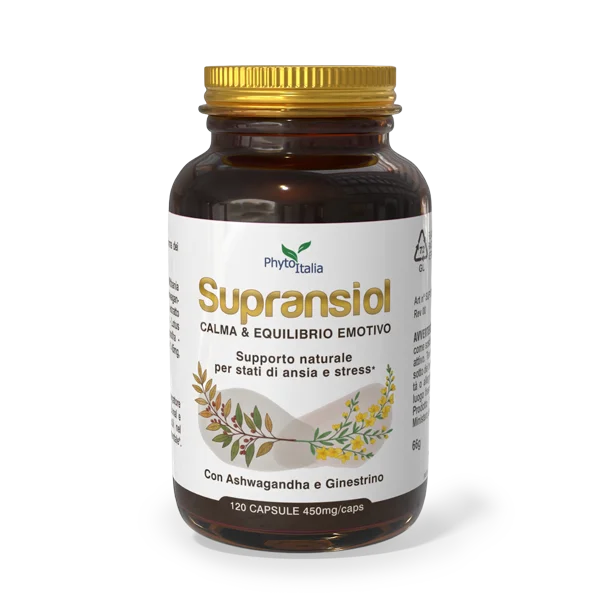
Supransiol is formulated to support the body during phases when recovery is no longer spontaneous.
Helps relieve states of stress and tension
Contributes to mental relaxation
Supports sleep quality
A support formulated to accompany the body during moments when the stress response becomes continuous.